Enhancing Design Projects with a 3D Rendered Playground Set
A 3D rendered playground set is an essential digital asset for anyone involved in architectural, educational, or recreational design. These sets provide realistic visualizations of play structures that can be used in planning spaces for children, showcasing ideas to clients, or integrating into school and park development projects. With the increasing demand for immersive and interactive designs, having access to a high-quality 3D playground set has become more relevant than ever.
What Is a 3D Rendered Playground Set?
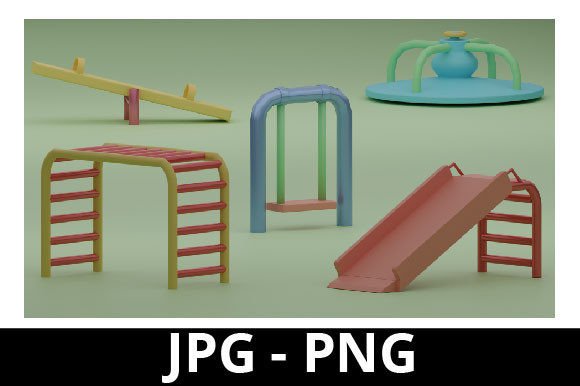
A 3D rendered playground set refers to a detailed digital model of a playground designed using 3D rendering software. These models typically include various elements such as slides, swings, ladders, playhouses, and other recreational equipment. The result is a visually rich and accurate representation of what the final structure will look like once built, making it invaluable for both conceptual and practical stages of a project.
Such sets are often available in downloadable ZIP folders that include multiple file formats—like JPG and PNG—which allows users to integrate them seamlessly into presentations, marketing materials, or design mockups. These files capture every detail, from the texture of plastic surfaces to the vibrant colors that make playgrounds engaging and safe for toddlers and preschoolers alike.
Key Features of a 3D Rendered Playground Set
- Realistic Textures: High-resolution textures mimic real-world materials such as wood, metal, and plastic, giving a true-to-life feel.
- Colorful Designs: The models are created with bright, cheerful colors to reflect the playful nature of playgrounds suitable for kindergartens and elementary schools.
- Modular Components: Sliders, climbing structures, and swing sets are often modular, allowing for customization and flexibility in layout design.
- Accurate Proportions: Each object is scaled precisely, ensuring that when integrated into larger scenes, everything aligns correctly in terms of space and function.
- Safe for Toddlers: The 3D models consider safety aspects like rounded edges, secure fastenings, and appropriate heights for child-friendly environments.
Applications Across Industries
The versatility of a 3D rendered playground set makes it useful across several industries. In architecture and urban planning, these sets help visualize how outdoor recreational areas will fit into a broader landscape. Educators and designers working on early childhood education facilities use them to plan playtime zones that encourage learning through activity.
Architectural and Urban Planning Use
When designing new schools or community parks, architects rely on 3D renderings to show stakeholders a clear picture of the proposed environment. A 3D rendered playground set helps in illustrating not just the aesthetics but also the functionality of the space. For example, showing a balance beam or climbing ladder in context can help planners understand how they contribute to a child's physical development.
Early Childhood Education and Preschool Design
In preschool and kindergarten settings, the integration of play and learning is crucial. A 3D rendered playground set enables educators and facility designers to create spaces that promote social interaction, motor skills, and cognitive growth. Playhouses, sliders, and swinging devices can be arranged to simulate different learning activities, from imaginative role-play to structured movement exercises.
Marketing and Presentation Purposes
For businesses selling playground equipment or offering design services, 3D rendered playground sets are excellent tools for client demonstrations. They allow potential buyers to see the product in a realistic setting before installation. This is especially useful when presenting options to parents, school administrators, or city officials who may need convincing about the value of colorful and engaging play structures.
Advantages of Using 3D Rendered Playground Sets
There are numerous advantages to incorporating 3D playground models into your workflow. One of the most significant is the ability to experiment with different layouts and configurations without the cost or risk of building a physical prototype. Additionally, these models offer a level of detail that traditional sketches or blueprints cannot match.
Visual Precision and Realism
Unlike flat images or hand-drawn illustrations, a 3D rendered playground set provides depth and perspective. You can rotate the model, zoom in on specific components like a swing or slide, and even simulate lighting conditions to see how the playground will appear during different times of the day. This realism enhances communication between designers and their audiences, whether they're fellow professionals or end users like parents and children.
Customization and Flexibility
One of the standout features of 3D models is their adaptability. A designer can modify the color scheme, adjust the height of a ladder, or add additional elements like a sandbox or musical panel. This makes it easy to tailor playground designs to meet specific needs—whether it’s for a small preschool courtyard or a large public park with multiple activity zones.
Cost-Effective Prototyping
Using a 3D rendered playground set eliminates the need for expensive physical prototypes. It allows for quick iterations and revisions, helping to save time and resources during the design phase. For hobbyists and independent creators, this means being able to explore creative ideas without financial strain.
Design Considerations for Effective Use
While 3D rendered playground sets are powerful tools, their effectiveness depends on thoughtful application. Understanding the target age group is essential—toddlers require simpler structures with smooth transitions, while older children might benefit from more complex climbing and sliding challenges. The surrounding environment should also be considered: does the playground sit within a larger park, or is it part of a school’s outdoor recreation area?
Age-Appropriate Design Elements
Playground sets must cater to the developmental stage of the children who will use them. Toddlers need low-height slides, soft landing surfaces, and gentle curves, whereas elementary-age kids enjoy more challenging features like multi-level playhouses or obstacle courses. A well-crafted 3D rendered playground set includes options for each of these requirements, enabling designers to choose the right components for the intended audience.
Space Utilization and Flow
Efficient use of space is another key factor. The arrangement of objects like swings, ladders, and slides affects how children interact with the environment. A 3D model allows you to test different spatial arrangements to ensure smooth flow and prevent congestion. It also helps identify potential hazards, such as sharp corners or gaps between platforms.
Integration with Surrounding Landscapes
Playgrounds don’t exist in isolation. When using a 3D rendered playground set, it's important to place it within the correct environmental context. This could involve placing it next to trees, under a canopy, or near a water feature. Proper integration ensures the playground looks natural and complements the overall design of the outdoor space.
Use Cases and Examples
Several scenarios highlight the practicality of using a 3D playground set. Here are a few common examples where they prove beneficial:
Planning a New School Playground
Imagine you’re tasked with redesigning a school’s outdoor area. A 3D rendered playground set can help you present a variety of options to the administration. You can showcase different combinations of slides, playhouses, and balance beams to illustrate how the playground supports both fun and exercise. This approach makes it easier to get approvals and funding based on tangible visuals.
Creating a Preschool Layout
Preschools often have limited space, so maximizing utility is vital. By using a 3D playground model, you can experiment with compact designs that still offer plenty of activity. For instance, a combination of a small playhouse and a short slider can serve as a focal point for unstructured play, encouraging creativity and exploration among young children.
Developing Marketing Content
Businesses that manufacture or install playground equipment can use 3D rendered sets to create compelling marketing content. By generating high-quality images and animations, they can demonstrate the durability, safety, and aesthetic appeal of their products. These assets can be shared online, included in brochures, or used in virtual tours to attract potential customers.
Trends in Playground Design and 3D Modeling
The world of playground design is constantly evolving, and 3D modeling plays a central role in keeping up with current trends. Today’s playgrounds are no longer just places for fun—they are designed to promote physical activity, social development, and even sustainability.
Inclusive and Accessible Playgrounds
Modern playgrounds aim to accommodate all children, including those with disabilities. 3D models now commonly include ramps, sensory panels, and adaptive swings. These additions help designers evaluate accessibility and ensure that every child can participate fully in the play experience.
Eco-Friendly Materials and Concepts
With a growing emphasis on environmental responsibility, many playgrounds are being constructed using sustainable materials. 3D models can reflect these choices by showing recycled plastics, rubberized flooring, or shaded areas made from natural elements. This helps communicate the eco-conscious nature of the design to clients and communities.
Themed Play Environments
Themed playgrounds, such as jungle adventures or fairy-tale villages, are becoming increasingly popular. A 3D rendered playground set can easily incorporate themed elements like cartoon characters, custom-shaped slides, or decorative climbing walls. These models allow designers to bring imaginative concepts to life while maintaining structural integrity and safety standards.
Practical Tips for Working with 3D Models
Whether you're an educator, architect, or hobbyist, here are some tips to maximize the value of a 3D rendered playground set:
- Start with a Clear Objective: Define what you want to achieve with the model—presentation, planning, or prototyping—to guide your design choices.
- Experiment with Lighting and Camera Angles: Adjust lighting to show off the colors and details of the set. Try different angles to highlight unique features like a spiral slide or a suspended bridge.
- Combine with Other Assets: Integrate the playground set with other 3D models like benches, trees, or fences to build a complete scene. This adds context and realism to your design.
- Optimize File Sizes: Since these models are often used in presentations or websites, compressing JPG and PNG files appropriately ensures fast loading times without sacrificing quality.
- Share Responsibly: If you're using a downloaded ZIP folder containing the 3D set, always check the licensing agreement to ensure proper usage rights.
Collaboration and Feedback
Sharing a 3D rendered playground set with stakeholders or team members can streamline the feedback process. Instead of relying on abstract descriptions, you can show them exactly what the finished product will look like. This transparency reduces misunderstandings and accelerates decision-making, especially in collaborative environments like urban planning committees or school board meetings.
Why Choose a 3D Rendered Playground Set Over Traditional Methods?
Traditional methods of playground design, such as hand-drawn plans or simple CAD models, often lack the visual impact needed to convey the full scope of a project. A 3D rendered playground set, on the other hand, offers a dynamic and immersive view that engages viewers at multiple levels. It also supports more accurate planning by providing realistic measurements and spatial relationships.
Moreover, 3D models can be animated to show how children might move through the space—climbing ladders, sliding down chutes, or playing hide-and-seek inside a colorful playhouse. This animation capability is particularly useful for explaining the benefits of a playground to non-experts, such as parents or investors.
Time Efficiency and Scalability
Once a 3D playground set is created, it can be reused and modified for different projects. This scalability is a major advantage for professionals managing multiple clients or locations. Whether you're designing for a single school or multiple community centers, a well-organized ZIP folder of 3D assets can significantly reduce the time required for each new visualization.
Conclusion Through Demonstration
To truly grasp the value of a 3D rendered playground set, consider how it transforms the design process. From its role in early childhood education to its use in large-scale urban planning, these models offer clarity, flexibility, and engagement. Their inclusion of realistic textures, modular components, and customizable features makes them indispensable for modern design workflows.
By leveraging a 3D playground set, you can ensure that your designs are not only functional and safe but also visually appealing and aligned with the latest trends in child development and recreation. As technology continues to advance, the importance of 3D modeling in creating effective and inspiring outdoor spaces for kids will only grow stronger.