3D Rendered Christmas Socks: A Modern Twist on Holiday Decor and Design Projects
As the holiday season approaches, many designers and content creators seek unique ways to incorporate festive elements into their work. Among the latest trends in digital design is the use of 3D rendered Christmas socks. These virtual representations offer a fresh take on traditional holiday motifs, allowing for creative flexibility, high-quality visuals, and seamless integration into various projects. Whether you're working on website graphics, print media, or product designs, 3D rendered Christmas socks can be an excellent resource.
What Are 3D Rendered Christmas Socks?
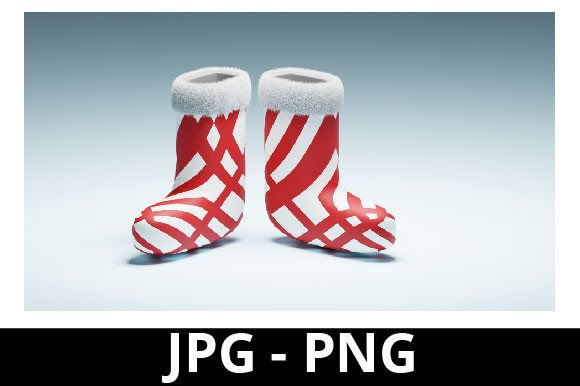
A 3D rendered Christmas sock is a digitally created visual asset that mimics the look and feel of real holiday-themed socks using three-dimensional modeling techniques. These renders are often highly detailed, capturing textures like cloth patterns, embroidered designs (such as Santa Claus or snowflakes), and realistic lighting effects. The result is a visually rich image that looks professional and can be manipulated easily within design software.
Typically, such assets come in formats like JPG and PNG, making them suitable for both web and print applications. They may also include additional files such as 3D icons, costume variations, and isolated objects — all of which provide more options for customization and usage. The inclusion of two socks in one render allows for symmetrical compositions or paired imagery, enhancing their versatility for design projects.
Distinctive Features of 3D Rendered Christmas Socks
- Realistic Detail: Unlike flat illustrations or basic vector art, 3D renders simulate depth, texture, and light reflection, offering a lifelike appearance that can elevate your project's aesthetic quality.
- Multiple Formats: Many ZIP folders containing these assets include both transparent PNGs and standard JPGs, giving users the freedom to choose based on their specific needs — whether it's a clean background for branding or a full-color image for promotional materials.
- Customization Potential: With access to 3D models, designers can change colors, add new decorations, or adjust the position and angle of the socks to better fit their layout or theme.
- Isolated Elements: These socks are often presented on a plain or transparent background, making them easy to integrate into any scene without worrying about unwanted elements or background clutter.
Comparing 3D Rendered Christmas Socks with Other Visual Assets
When considering festive design elements, it’s important to understand how 3D rendered Christmas socks compare to other types of visual assets:
1. Traditional Vector Illustrations
Vector illustrations are commonly used for scalable holiday graphics. While they are efficient for logo creation or simple animations, they lack the depth and realism that 3D rendering provides. If your goal is to create a more immersive or photorealistic scene, then 3D rendered Christmas socks would be the better choice.
2. Stock Photos
Stock photos of actual Christmas socks can be useful for certain purposes, but they are limited in terms of control over composition, color, and style. In contrast, 3D renders allow for full customization. For example, if you want a pair of minimalist red Christmas socks with a subtle Santa Claus motif, a 3D model can be edited to achieve this look without relying on pre-existing photographs.
3. Flat Digital Art
Flat art is ideal for clean, modern designs, but it doesn’t offer the same level of detail or dimensionality as 3D rendering. When designing for winter celebrations, especially those involving physical products or holiday scenes, the added realism of a 3D rendered Christmas sock can make a significant difference in the final output.
Strengths and Tradeoffs of Using 3D Rendered Christmas Socks
Using 3D rendered Christmas socks comes with several advantages, but there are also some considerations to keep in mind depending on your project's scope and requirements.
Strengths
- High-Quality Resolution: 3D renders are typically created at high resolutions, ensuring clarity and sharpness even when scaled up for large prints or high-definition displays.
- Consistency in Style: Since these socks are modeled digitally, they maintain consistent proportions, colors, and textures across different uses, which is essential for branding or product packaging.
- Adaptability: You can modify the design, rotate the object, or place it in any environment, making it suitable for a wide range of design scenarios — from e-commerce product pages to animated holiday greetings.
- Time Efficiency: Rather than photographing or drawing each variation, designers can quickly generate multiple versions using the provided 3D assets.
Tradeoffs and Limitations
- Technical Requirements: Working with 3D models may require specialized software such as Blender, Cinema 4D, or Maya. If you’re not familiar with 3D editing tools, this could pose a learning curve.
- Cost Consideration: High-quality 3D rendered assets can be more expensive than flat images or stock photos, though the investment often pays off in long-term usability and flexibility.
- File Size and Format: Some 3D files may be large or need conversion before use, particularly if you only have access to the original OBJ or FBX files rather than pre-rendered images.
Best-Fit Situations for 3D Rendered Christmas Socks
These assets shine in particular contexts where visual accuracy and adaptability are key. Here are a few examples of when they might be the best option:
- E-Commerce Product Listings: Showcasing custom-designed socks online becomes much easier with 3D renders, as you can present them from various angles and under different lighting conditions.
- Print and Packaging Design: Use them for gift tags, wrapping paper, or holiday catalogs where a premium look is desired. Their realistic textures help convey the tactile experience of the product.
- Digital Marketing Campaigns: Incorporate them into social media posts, email headers, or ad banners to create eye-catching visuals that align with a brand’s style — whether it's cartoon-like fun or sleek minimalism.
- Interior Design Concepts: If you're creating a holiday-themed room layout or concept for a client, adding a pair of 3D rendered decorative Christmas socks can enhance the overall festive atmosphere without needing to source physical props.
Choosing Between 3D Renders and Alternatives
Deciding whether to use 3D rendered Christmas socks depends on several factors. Below are some questions to consider during your evaluation:
- Do I need a realistic visual representation of a sock with cloth texture and dimensional accuracy?
- Will the design benefit from being able to reposition or recolor the sock easily?
- Am I targeting a high-end or premium audience that expects polished, professional visuals?
- Do I have the technical skills or resources to edit 3D models, or will I rely solely on pre-rendered images?
If the answer to most of these is “yes,” then 3D rendered Christmas socks are likely a strong fit. However, if your project requires quick turnaround and minimal complexity, a well-edited stock photo or vector graphic might suffice and save time and cost.
Practical Examples of Usage
To illustrate how these assets can be applied, here are a few practical examples:
Example 1: Online Retail Storefront
An e-commerce site selling holiday-themed apparel can use 3D rendered Christmas socks to display product variations in different colors and styles. By rotating the 3D model, customers get a 360-degree view of the item, improving engagement and reducing return rates due to unclear expectations.
Example 2: Print Media and Packaging
A greeting card company looking to add a festive touch to its winter collection can embed a pair of 3D rendered Christmas socks into the background of their cards. The minimalist design ensures the focus remains on the message while still delivering a cozy holiday vibe.
Example 3: Social Media Content Creation
Brands aiming to promote December sales or events can leverage 3D renders to create cohesive visual themes. For instance, placing a cartoon-style Santa Claus 3D sock against a snowy landscape can evoke a sense of celebration and warmth, perfect for a "Merry Christmas" campaign.
Design Tips for Effective Use
To maximize the impact of 3D rendered Christmas socks in your projects, consider the following tips:
- Mix and Match Styles: Combine a realistic 3D render with flat design elements for a balanced yet dynamic composition.
- Use Transparent Backgrounds: PNG files with transparent backgrounds are ideal for layering onto other holiday elements like gift boxes or wreaths.
- Highlight Key Features: Focus on the iconic aspects — like the red color, Santa Claus icon, or festive patterns — to ensure the socks stand out as a holiday symbol.
- Keep It Contextual: Ensure the placement and styling of the socks match the overall tone of the project. For corporate clients, a more subdued and elegant approach may be appropriate; for children’s products, a vibrant and playful style works better.
Conclusion
3D rendered Christmas socks offer a compelling solution for designers who want to blend tradition with innovation. Their ability to deliver realistic, customizable, and adaptable visuals makes them a valuable asset in both digital and print environments. While they may require more technical know-how than simpler alternatives, the benefits often justify the effort, especially when precision and creativity are top priorities.
Ultimately, the decision to use 3D rendered Christmas socks should depend on your project goals, audience expectations, and available resources. By understanding the strengths and limitations of these assets, you can determine whether they are the right fit for your next holiday design endeavor.